
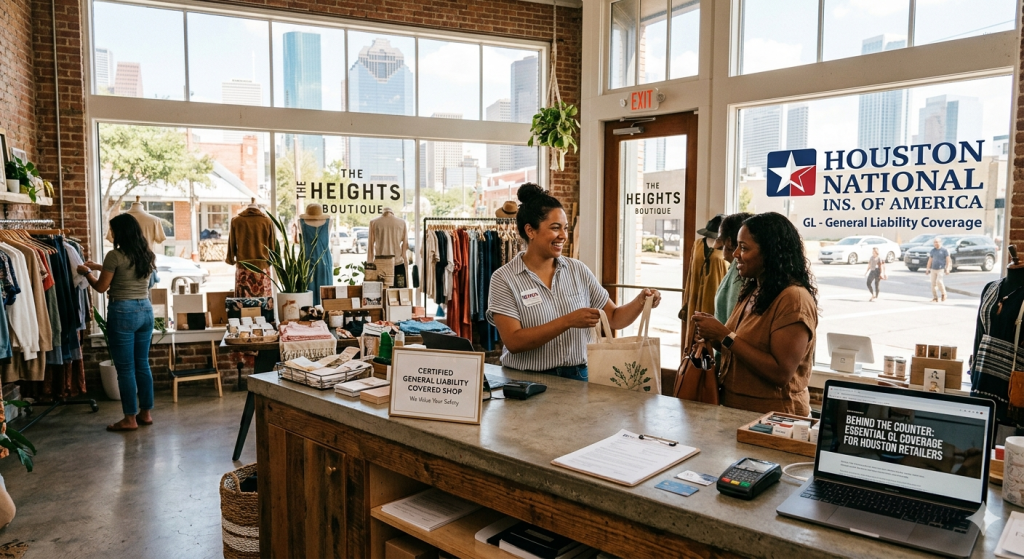
From the upscale boutiques of the Galleria to the vibrant storefronts in the Heights and Montrose, Houston is a paradise for brick-and-mortar retail. While our local retail sector drives immense foot traffic and fuels the city’s diverse economy, managing the risks of a busy storefront makes securing General Liability insurance an essential step for every local shop owner.
However, running a physical store means welcoming the public onto your property every single day. The moment a customer steps across your threshold, your financial exposure changes. One stray spill, an unmoored display rack, or a minor product defect can turn a profitable quarter into a legal nightmare.
For Houston store owners, General Liability (GL) Insurance isn’t just an item on a startup checklist—it is the foundational shield that stands between your business and a catastrophic lawsuit. Here is a look at what happens behind the counter, and why specialized liability protection is non-negotiable for local retailers.
What Does General Liability Actually Cover?
Commercial General Liability is designed to protect your retail business against three primary categories of third-party claims: bodily injury, property damage, and personal/advertising injury.
1. Third-Party Bodily Injury
This is the most common threat a retailer faces. If a customer enters your shop and suffers a physical injury, you could be held liable for their medical expenses, lost wages, and legal costs.
- The Retail Scenario: A classic Houston summer thunderstorm hits, and patrons track water into your entryway. Before your team can place a “Wet Floor” sign, a shopper slips on the slick tile, fractures their wrist, and requires emergency surgery. Your GL policy steps in to cover the medical bills and your legal defense if they choose to sue.
2. Third-Party Property Damage
Accidents happen, and sometimes it’s your customer’s high-value property that bears the brunt of it.
- The Retail Scenario: While a customer is checking out, an unstable countertop display collapses, crushing their high-end smartphone or tearing an expensive designer handbag. General liability covers the cost to repair or replace their damaged possessions.
3. Personal and Advertising Injury
Liability isn’t strictly about physical mishaps. It also covers non-physical damages stemming from your business operations, marketing, or employee actions.
- The Retail Scenario: A store employee mistakenly accuses a shopper of shoplifting in front of other customers. If that shopper sues your business for defamation or false imprisonment, your general liability policy provides the necessary legal protection. It also protects you if an online ad you run accidentally mimics a competitor’s copyrighted branding.
Retail Cost Realities in Texas
For standard customer-facing retail operations—such as clothing boutiques, gift shops, and specialty stores—the average cost for a standard $1M per occurrence / $2M aggregate general liability policy typically ranges from $50 to $85 per month ($600 to $1,000 annually).
However, your specific premium rate depends on several unique variables:
- Annual Revenue & Foot Traffic: Higher sales volume and heavier daily foot traffic mean a higher statistical probability of an incident occurring.
- Product Risk Profile: A boutique selling artisanal clothing carries a vastly different risk profile than a specialty store selling home-improvement tools or children’s toys.
- Claims History: Maintaining a clean loss record free of frequent slip-and-falls is your ticket to unlocking the most competitive pricing tiers from underwriters.
Smart Upgrades: The Business Owner’s Policy (BOP)
If you operate a physical retail shop, buying a standalone general liability policy usually leaves a massive gap in your protection. While GL protects you if a customer gets hurt, it does not protect your actual store contents.
To safeguard your physical assets, Houston retailers should look into a Business Owner’s Policy (BOP). A BOP seamlessly packages your General Liability with Commercial Property Insurance. Bundling these together can save you 15% to 25% compared to purchasing the policies separately. A BOP protects:
- Your Inventory: Covers your apparel, electronics, or stock if it is destroyed by an unexpected fire or stolen during a break-in.
- Your Fixtures & Signage: Protects your custom displays, point-of-sale systems, clothing racks, and exterior signs.
- Business Interruption: If a disaster forces your storefront to close temporarily for repairs, this coverage replaces your lost net income and helps pay ongoing expenses like payroll and rent.
Partner with a Local Expert
Don’t wait for a costly accident to find out if your business is exposed. Every retail niche has its own unique quirks, and your commercial insurance policy should be tailored to fit your specific floor plan and product line.
Partnering with a local independent broker like Houston National Insurance of America ensures your business is matched with the right carrier at the most competitive rate. We live and work in the same Gulf Coast market you do, giving us the localized insight needed to accurately protect your storefront, your staff, and your bottom line.
Have questions about setting up the right liability limits for your storefront? Let’s discuss your retail operations in the comments below, or reach out to secure a customized quote!