
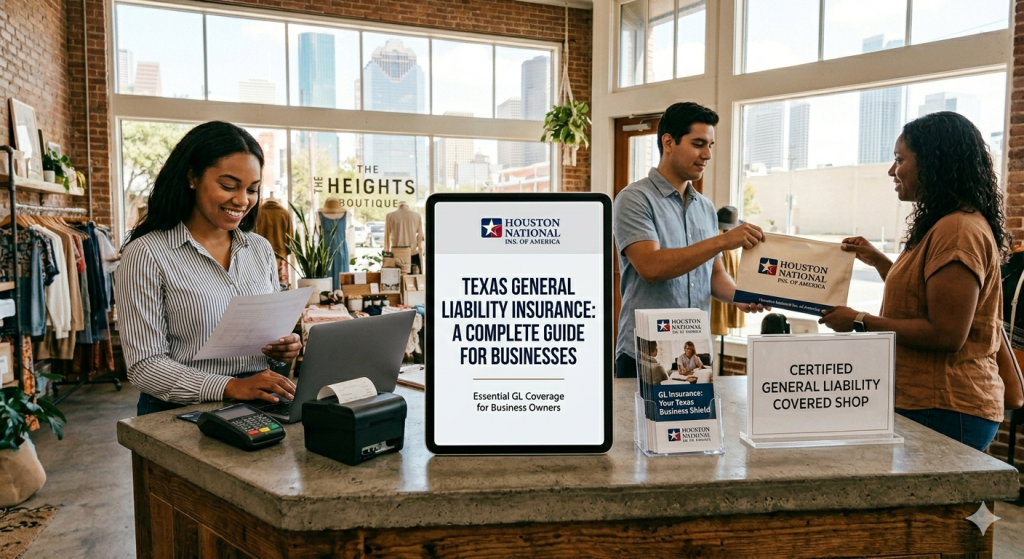
From the bustling tech hubs of Austin and the sprawling energy sector in Houston to the historic storefronts of Fort Worth, Texas is an absolute powerhouse for businesses. Operating in the Lone Star State brings massive opportunity—but it also comes with its fair share of risks, making General Liability Insurance an essential safeguard for your daily operations.
Whether you run a boutique shop, a consulting firm, or a construction crew, an unexpected accident can derail your hard work overnight. That is where Texas General Liability (GL) Insurance comes in.
This comprehensive guide breaks down what Texas general liability insurance is, what it covers, and why it is the ultimate shield for your business assets.
What is Texas General Liability Insurance?
General liability insurance is the absolute bedrock of a commercial insurance portfolio. Often referred to as “slip-and-fall” insurance, it protects your business from financial ruin if you are held legally liable for causing bodily injury, property damage, or personal/advertising injury to a third party.
If a client, delivery driver, or passerby sues your business, your GL policy steps in to cover:
- Legal defense fees and attorney costs.
- Court judgments, settlements, or mandates.
- Medical expenses for injured parties.
What Does General Liability Insurance Cover in Texas?
A standard Texas general liability policy primarily covers three major categories of risk:
1. Third-Party Bodily Injury
If a customer slips on a wet floor in your Houston storefront or trips over a tool at your Dallas job site, you could be on the hook for their medical bills. General liability covers their ambulance rides, ER visits, surgeries, and ongoing care, saving you from paying out of pocket.
2. Third-Party Property Damage
Accidents happen. If an IT consultant spills coffee on a client’s server rack, or a painter drops a ladder onto a homeowner’s luxury vehicle, your business is responsible for the repairs or replacement. GL coverage steps in to handle those costs.
3. Personal and Advertising Injury
Liability isn’t always physical. If your business is sued for copyright infringement in an advertisement, libel, slander, or violating someone’s privacy, your policy covers the resulting legal fees and damages.
Note: “Third-party” refers to anyone who does not work for your company (e.g., customers, vendors, or competitors).
What is Not Covered?
While general liability is a powerful shield, it isn’t a catch-all. To ensure your Texas business is fully protected, you will need separate policies for risks like:
- Employee Injuries: Covered by Workers’ Compensation (which is optional for most private employers in Texas, but highly recommended).
- Professional Mistakes: Errors, omissions, or malpractice are covered by Professional Liability Insurance (Errors & Omissions).
- Company Vehicles: Covered by Commercial Auto Insurance.
- Your Business Property: Damage to your own building or inventory is covered by Commercial Property Insurance.
Why Do Texas Businesses Need General Liability Insurance?
While the State of Texas does not legally mandate general liability insurance for every single business type, skipping out on it is a massive gamble. Here is why Texas business owners consider it essential:
1. Landlords Require It
If you want to lease a commercial storefront in a popular retail district like The Heights in Houston or South Congress in Austin, your landlord will almost certainly require a Certificate of Insurance (COI) proving you carry GL coverage before handing over the keys.
2. Securing Client Contracts
Many corporate clients, government agencies, and general contractors will not sign a contract with you unless you can prove you are insured. Having GL coverage gives them peace of mind and allows you to win bigger bids.
3. The “Texas-Sized” Lawsuit Risk
Texas courts can be expensive, and legal fees accumulate quickly even if a lawsuit is completely frivolous. Without insurance, a single major lawsuit could easily force a small business into bankruptcy.
How Much Does General Liability Cost in Texas?
There is no one-size-fits-all price tag for commercial insurance. Texas insurance carriers calculate your premium based on several key risk factors:
| Risk Factor | How It Affects Your Premium |
| Industry Type | A roofing contractor pays more than an accountant because their risk of property damage and injury is much higher. |
| Business Location | Operating in a densely populated metro area like Houston or Dallas may carry slightly higher premiums than rural Texas towns. |
| Gross Revenue & Payroll | High-volume businesses naturally interact with more people, increasing the overall statistical risk. |
| Claims History | A clean track record with zero past claims earns you the most competitive rates. |
For most Texas small businesses, a standard $\$1 \text{ Million} / \$2 \text{ Million}$ policy (meaning up to $\$1 \text{ million}$ covered per single occurrence, and up to $\$2 \text{ million}$ total over the policy year) is surprisingly affordable, often starting at just a few hundred dollars a year.
Secure Your Lone Star Business Today
Your business is the result of endless hours of hard work and dedication. Don’t let an accidental slip or a misplaced tool put it all at risk. Investing in a solid Texas general liability insurance policy ensures that no matter what happens, your business has the financial foundation to keep moving forward.