
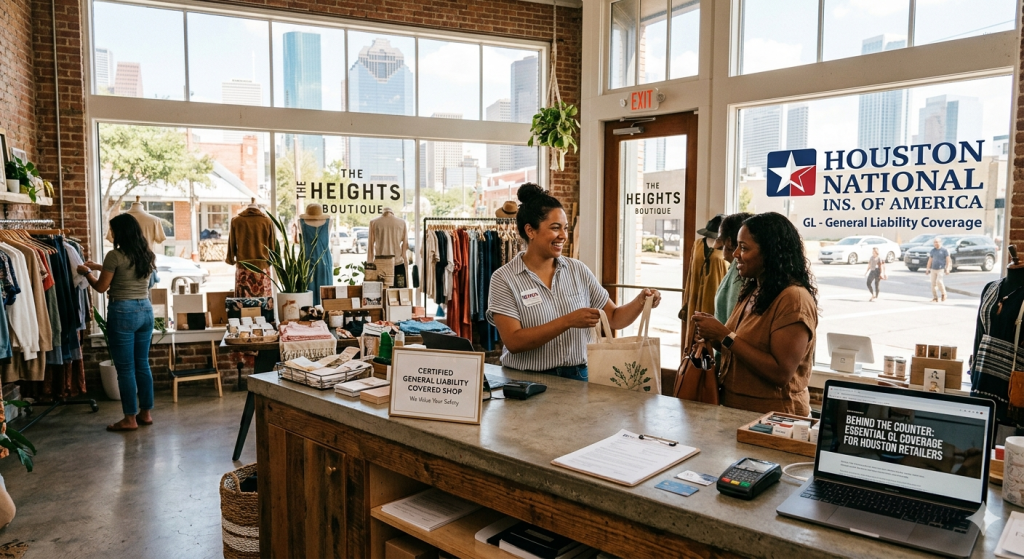
From the bustling tech hubs of Austin and the sprawling energy sector in Houston to the historic storefronts of Fort Worth, Texas is an absolute powerhouse for businesses. Operating in the Lone Star State brings massive opportunity—but it also comes with its fair share of risks, making General Liability Insurance an essential safeguard for your daily operations.
Whether you run a popular retail boutique in Houston’s The Heights district, a thriving contracting business, or a fast-growing professional consultancy, an unexpected accident can derail your hard work overnight.
If you are wondering exactly what a Texas General Liability (GL) policy does—and doesn’t—protect against, this guide has you covered.
The Basics: What is General Liability Insurance?
Often called “slip-and-fall” insurance, General Liability Insurance is the foundation of a commercial insurance portfolio. It protects your business from financial ruin if you are held legally responsible for causing bodily injury, property damage, or advertising harm to a third party.
If a client, delivery driver, or passerby sues your business, a standard GL policy steps in to cover:
- Legal Defense Fees: The cost of hiring lawyers, investigators, and expert witnesses.
- Court Costs: Filing fees, administrative expenses, and general court overhead.
- Settlements and Judgments: The actual payout ordered by a court or agreed upon to drop a lawsuit.
- Medical Payments: Immediate medical expenses for an injured party, which can often prevent a lawsuit altogether.
The Big Three: What Is Covered in Texas?
A standard Texas general liability policy primarily covers three major categories of third-party risk. In insurance terms, “third-party” refers to anyone who does not work for your company—such as customers, vendors, or competitors.
1. Third-Party Bodily Injury
If a customer slips on a freshly mopped floor at your shop or trips over an extension cord at a job site, your business could be held liable for their injuries.
- What GL covers: Ambulance rides, emergency room visits, surgeries, medications, and physical therapy. It also covers your legal defense if they decide to sue.
2. Third-Party Property Damage
Accidents happen when you’re working on-site or hosting clients. If an IT consultant spills coffee onto a client’s expensive server rack, or a painter drops a ladder onto a homeowner’s vehicle, your business is responsible for the fallout.
- What GL covers: The cost to repair or replace the damaged property belonging to a client, vendor, or bystander.
3. Personal and Advertising Injury
Liability isn’t always physical; it can also be financial or reputational. If your business is accused of digital or print misconduct, you can face costly litigation.
- What GL covers: Legal defense and damages related to copyright infringement in your advertising, libel, slander, invasion of privacy, or wrongfully taking a competitor’s business ideas.
What is Not Covered?
While general liability is a powerful shield, it isn’t a catch-all. To ensure your Texas enterprise is fully protected, you will need separate policies for risks that fall outside of a GL policy:
- Employee Injuries: General liability does not cover injuries to your own staff. For this, you need Workers’ Compensation Insurance (which is optional for most private employers in Texas, but highly recommended to avoid direct employee lawsuits).
- Professional Mistakes: If you give bad advice, miss a deadline, or make an administrative error that costs a client money, GL won’t help. You need Professional Liability Insurance (also known as Errors & Omissions, or E&O).
- Company Vehicles: Accidents involving cars, trucks, or vans owned by your business require a Commercial Auto Insurance policy.
- Your Own Business Property: Damage to your building, office furniture, or inventory from fire, theft, or severe weather requires Commercial Property Insurance.
Why Texas Businesses Specifically Need This Coverage
While the State of Texas does not legally mandate general liability insurance for every single business type, operating without it is a massive gamble for a few key reasons:
Landlord Requirements
If you want to lease a commercial storefront or office space anywhere in Texas, your landlord will almost certainly require a Certificate of Insurance (COI) proving you carry GL coverage before they will hand over the keys.
Winning Client Contracts
Many corporate clients, government agencies, and general contractors will not sign a contract with you unless you can prove you are insured. Having a GL policy gives them peace of mind and allows you to compete for bigger, higher-paying contracts.
The Cost of Texas Litigation
Legal fees accumulate quickly, even if a lawsuit against your business is completely frivolous. Without insurance, a single major lawsuit could easily wipe out your cash reserves and force a small business into bankruptcy.
Protect Your Hard Work
Your business is the result of endless hours of dedication. Investing in a solid Texas general liability insurance policy ensures that no matter what unexpected accidents come your way, your business has the financial foundation to keep moving forward.